Pachanga for Beginners: Charanga Music and a Bouncy Dance
Contents
- Pachanga in a few words
- Eduardo Davidson and “La Pachanga”
- The charanga sound
- Cha-cha-chá, merengue, and pachanga
- Pachanga in New York
- Johnny Pacheco and the charanga boom
- 1961: an international dance craze
- How dancers describe the bounce
- Pachanga today: salsa shines
- Tips for beginners
- FAQ
- What is pachanga?
- Who created pachanga?
- How is pachanga danced?
In short: Wikipedia describes pachanga as “a mixture of son montuno and merengue” with “an accompanying signature style of dance,” and says it “originated in Cuba in the 1950s.” Its music has “a festive, lively style,” and it is “an offshoot music played by charangas,” Cuban dance bands that play on instruments such as violin and flute. Wikipedia calls Eduardo Davidson’s 1959 song “La Pachanga” “the classic example of the pachanga genre,” and José Fajardo brought it to New York “in the Cuban charanga style.” In the Bronx, the Caravana Club is “commonly thought of as the home of Pachanga.” As a dance, Wikipedia says pachanga is “a very grounded dance,” with “a bounce originating in the knees” and a Charleston flavor from “the double bending and straightening of the knees.” Today it lives on mostly in salsa shines.
If you have heard salsa dancers mention “pachanga” during a footwork class, or seen the word on an old record sleeve, you may have wondered what it is. This post looks at where pachanga comes from, the charanga sound behind it, and how dancers describe its bounce, in plain English.
Please read this first: I am a curious local in Sapporo, not a musician or a dance instructor, and I am not affiliated with any studio or school. This post organizes what I read in the sources listed at the end. Music history is told in different ways, and the sources below don’t all tell pachanga’s story the same way, so if a teacher you trust explains it differently, follow their lead.
Pachanga in a few words
Wikipedia’s article “Pachanga” opens by calling it “a genre of music which is described as a mixture of son montuno and merengue and has an accompanying signature style of dance.” It says the music “has a festive, lively style and is marked by jocular, mischievous lyrics.”
| Pachanga | What the sources say | |
|---|---|---|
| Where it comes from | Cuba | Wikipedia, “Pachanga” |
| When | “In the 1950s”; the infobox gives “Cuba, 1959” | Wikipedia, “Pachanga” |
| Musical roots | “A mixture of son montuno and merengue” | Wikipedia, “Pachanga” |
| Who played it | “An offshoot music played by charangas” | Wikipedia, “Pachanga” |
| The classic song | “La Pachanga” (1959) by Eduardo Davidson | Wikipedia, “La Pachanga (song)” and “Eduardo Davidson” |
| How it sounds | “Very similar in sound to Cha-Cha but with a notably stronger down-beat” | Wikipedia, “Pachanga” |
| Later influence | “Considered a prominent contributor to the eventual rise of salsa” | Wikipedia, “Pachanga” |
Eduardo Davidson and “La Pachanga”
Wikipedia’s article on Eduardo Davidson says he was born Claudio Cuza on October 30, 1929, in Baracoa, Cuba, and died on June 10, 1994, in New York City. It says he “is best known as the creator of the pachanga” and “is credited with choreographing the original form of the Pachanga dance.”
Here is how each article describes the song’s beginnings:
- Wikipedia, “Eduardo Davidson”: the song “debuted on May 21, 1959, on the CMQ television’s musical program ‘Casino de la Alegria.’” Davidson wrote for the program, wrote the song for the vocalist Ruben Rios, and chose Orquesta Sublime to play it. It “was also first recorded by Orquesta Sublime with vocals by Ruben Rios.”
- Wikipedia, “La Pachanga (song)”: it calls “La Pachanga” (The Party) “a 1959 song by Eduardo Davidson, which is considered the classic example of the pachanga genre,” and says it “was premiered by the Charanga band of the flautist Melquiades Fundora in Havana.”
The Davidson article also says that some sources “incorrectly contend” that José Fajardo’s charanga was the first to perform a pachanga, but that Fajardo “was critical to making Pachanga a mainstream success” and “composed many Pachanga orchestrations.”
The charanga sound
Pachanga is closely tied to the charanga, a type of Cuban dance band.
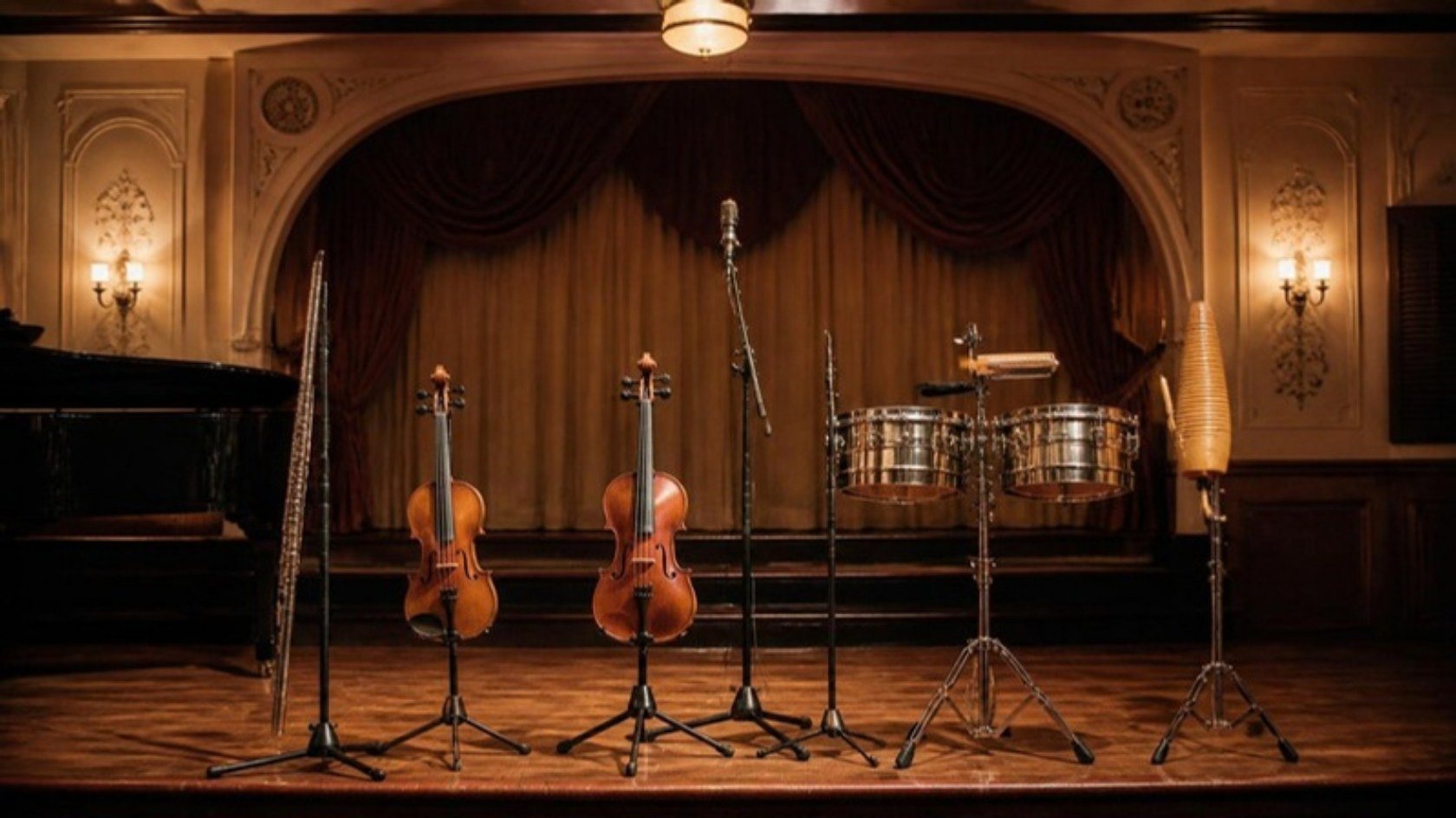
Wikipedia’s article “Charanga (Cuba)” describes the charanga as “a traditional ensemble that plays Cuban dance music,” performed “on European instruments such as violin and flute.” It says the style most associated with the charanga is the danzón. In the older charanga francesa, according to the same article, “flutes and strings replaced the brass and woodwinds” of the earlier orquesta típica, and a small drum kit called pailas, now called timbales, replaced the timpani.
| Instrument | Where it is mentioned |
|---|---|
| Flute | Wikipedia, “Charanga (Cuba)” and “Pachanga” |
| Violin | Wikipedia, “Charanga (Cuba)” and “Pachanga” |
| Timbales (once called pailas) | Wikipedia, “Charanga (Cuba)” |
| Drums | Wikipedia, “Pachanga” |
The “Pachanga” article also clears up a common mix-up. It says “the orquesta, or band, was referred to as charanga, while the accompanying dance was named the pachanga,” and that because the two words sound alike, “these two notions are often confused.”
My post Danzón for Beginners: Cuba’s Elegant Dance and Its Music tells the story of the charanga’s best-known style.
Cha-cha-chá, merengue, and pachanga
Here is how the sources describe pachanga’s relatives:
- Merengue and son montuno: Wikipedia’s “Pachanga” article describes the genre as “a mixture of son montuno and merengue.”
- Cha-cha-chá: the same article calls pachanga “very similar in sound to Cha-Cha but with a notably stronger down-beat.”
- Both together: Wikipedia’s article on Johnny Pacheco says “the music for the pachanga was heavily influenced by the uptempo merengue and cha-cha-cha hybrid style originated by Eduardo Davidson in 1959,” and that “José Fajardo’s charanga popularized this style in Cuba.” It also calls pachanga “a blend of Cuban rhythms and Dominican merengue in the late 1950s.”
My post Cha-Cha for Beginners: The Rhythm of ‘Two, Three, Cha-Cha-Cha’ explains the cha-cha-chá count, and Merengue for Beginners: An Easy Latin Dance to Start introduces merengue.
Pachanga in New York
Wikipedia’s “Pachanga” article says “José Fajardo brought the song ‘La Pachanga’ to New York in the Cuban charanga style.” It describes how Cuban immigration after World War II helped build a Latin music scene in New York, especially in the South Bronx, where Caribbean ballrooms, clubs, and dance halls grew. It says mambo came first, and “it wasn’t long before everyone in New York was listening and dancing to Pachanga.”
The article names two clubs:
| Club | What Wikipedia says |
|---|---|
| Caravana Club (the Bronx) | “Commonly thought of as the home of Pachanga.” It opened in the summer of 1959, and its popularity rose after Charlie Palmieri’s live recording “Pachanga at the Caravana Club” in 1961 |
| Triton After-Hours Club | Johnny Pacheco “improvised a dance move known as the ‘Bronx Hop’ which later became a major part of the Pachanga dance fad” |
Patrons at the Caravana Club even formed a dance group called “Los Pachangueros,” and Wikipedia says articles about the craze appeared in The New York Times, El Diario, and Ballroom Dance Magazine.
Johnny Pacheco and the charanga boom
Wikipedia’s article on Johnny Pacheco, the Dominican-born flutist and bandleader who later co-founded Fania Records, calls him “one of the leading exponents of pachanga.” It says:
- 1959: Pacheco and the pianist Charlie Palmieri formed the charanga La Duboney, with Pacheco on flute.
- 1960: Pacheco formed his own band, Pacheco y su Charanga. Its debut album “sold 100,000 copies within the first year of its release.”
- The dance fad: “Pacheco’s success led to a new dance fad, the pachanga (combination of ‘Pacheco’ and ‘charanga’).”
Note that this explanation of the name comes from the Pacheco article. The Davidson and “La Pachanga (song)” articles date Davidson’s song to 1959, before Pacheco formed his own band in 1960.
1961: an international dance craze
Wikipedia says Davidson’s “La Pachanga” “achieved international recognition in 1961” when it was licensed in three versions: by Genie Pace on Capitol, by Audrey Arno in a German version on European Decca, and by Hugo and Luigi with their children’s chorus. It quotes Billboard (March 20, 1961): “A bright new dance craze from the Latins has resulted in these three good recordings, all with interesting and varying treatments.”
How dancers describe the bounce
Wikipedia’s “Pachanga” article, citing a 1962 dance book, describes pachanga as “a happy-go-lucky dance” of Cuban origin “with a Charleston flavor due to the double bending and straightening of the knees.” It says the dance is done “on the downbeat of four-four time to the usual mambo offbeat music characterized by the charanga instrumentation of flutes, violins, and drums.”
The article’s section on steps describes the movement this way:
| Part of the body | What Wikipedia says |
|---|---|
| Knees | “A basic pachanga step consists of a bending and straightening of the knees,” with “the knees never completely straightening” |
| Weight | “A very grounded dance” with “an emphasis on weight and energy going into the ground” |
| Upper body | “With a bounce originating in the knees, the upper body will rock as body connectivity and posture are maintained” |
| Feet | “It mimics a basic mambo step in foot placement and weight shift while incorporating a glide on weight transfer instead of a tap” |
| The look | The weight shift “gives the illusion of gliding, similar to a moonwalk” |
Pachanga today: salsa shines
Wikipedia says “pachanga dance today is mainly seen incorporated into salsa shines or footwork.” It adds that “while it is not a very popular social dance, many salsa dancers incorporate pachanga movements into their choreography, especially in mambo or salsa on-2 routines,” and that pachanga “is taught all over the world at different salsa events and congresses.”
Tips for beginners
These are my own suggestions, not rules from the sources.
- Listen for the flute and violins. When you play a pachanga recording, try to pick out the charanga instruments.
- Compare it with cha-cha-chá. Play a cha-cha-chá and a pachanga back to back, and listen for the stronger downbeat the “Pachanga” article mentions.
- Notice the knees. If you watch dancers, look for the bend and stretch of the knees and the grounded feel.
- Ask a teacher about the steps. The sources describe the movement in words, so a teacher is the best guide for how to dance it safely and in time.
Pachanga took shape in Cuba around Eduardo Davidson’s 1959 song “La Pachanga,” was played by charangas with flute and violins, and became a dance craze in New York, where, according to Wikipedia, Johnny Pacheco’s success with his charanga led to a new dance fad. Next time a salsa teacher calls out a “pachanga” in a shines class, you will know where that bouncy step comes from.
FAQ
What is pachanga?
Wikipedia describes pachanga as a genre of music “described as a mixture of son montuno and merengue” with “an accompanying signature style of dance.” It says pachanga originated in Cuba in the 1950s and was played by charangas, Cuban dance bands that use instruments such as violin and flute.
Who created pachanga?
Wikipedia’s article on Eduardo Davidson says he “is best known as the creator of the pachanga,” and that his 1959 song “La Pachanga” debuted on Cuban television; the article on the song says it was premiered by Melquiades Fundora’s charanga in Havana. Wikipedia’s article on Johnny Pacheco says Pacheco’s success in New York “led to a new dance fad, the pachanga,” and calls him one of its leading exponents.
How is pachanga danced?
Wikipedia describes it as “a very grounded dance” built on “a bending and straightening of the knees,” with the bounce coming from the knees and the upper body rocking. It says the steps mimic a basic mambo step, with a glide on the weight transfer instead of a tap. Ask a teacher for the steps.
Sources checked: Wikipedia, “Pachanga”, Wikipedia, “Eduardo Davidson”, Wikipedia, “La Pachanga (song)”, Wikipedia, “Charanga (Cuba)”, Wikipedia, “Johnny Pacheco”. Checked on October 8, 2026. Music history is described in different ways by different writers. Corrections are always welcome.