Son Cubano for Beginners: The Roots of Salsa in Eastern Cuba
Contents
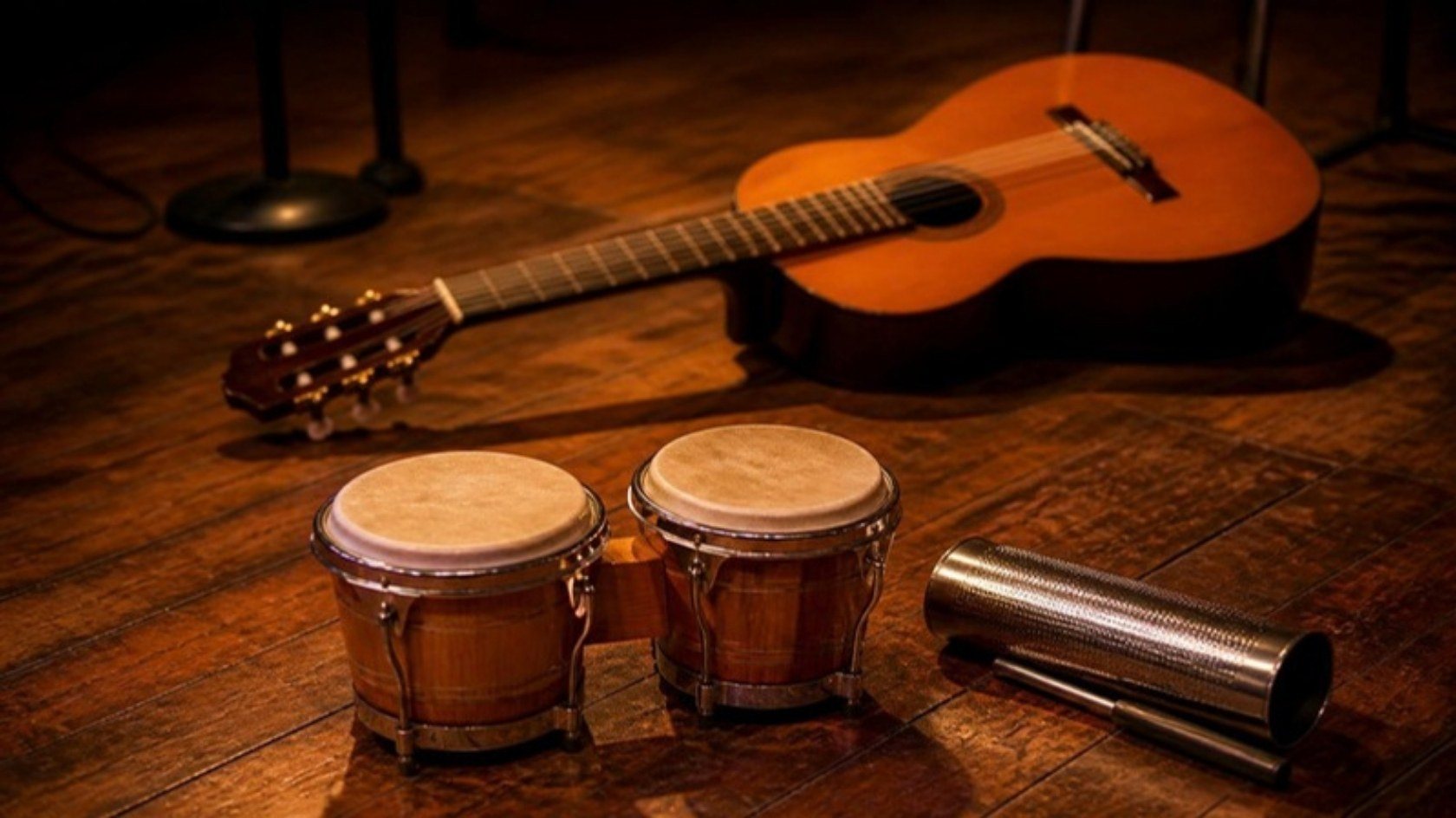
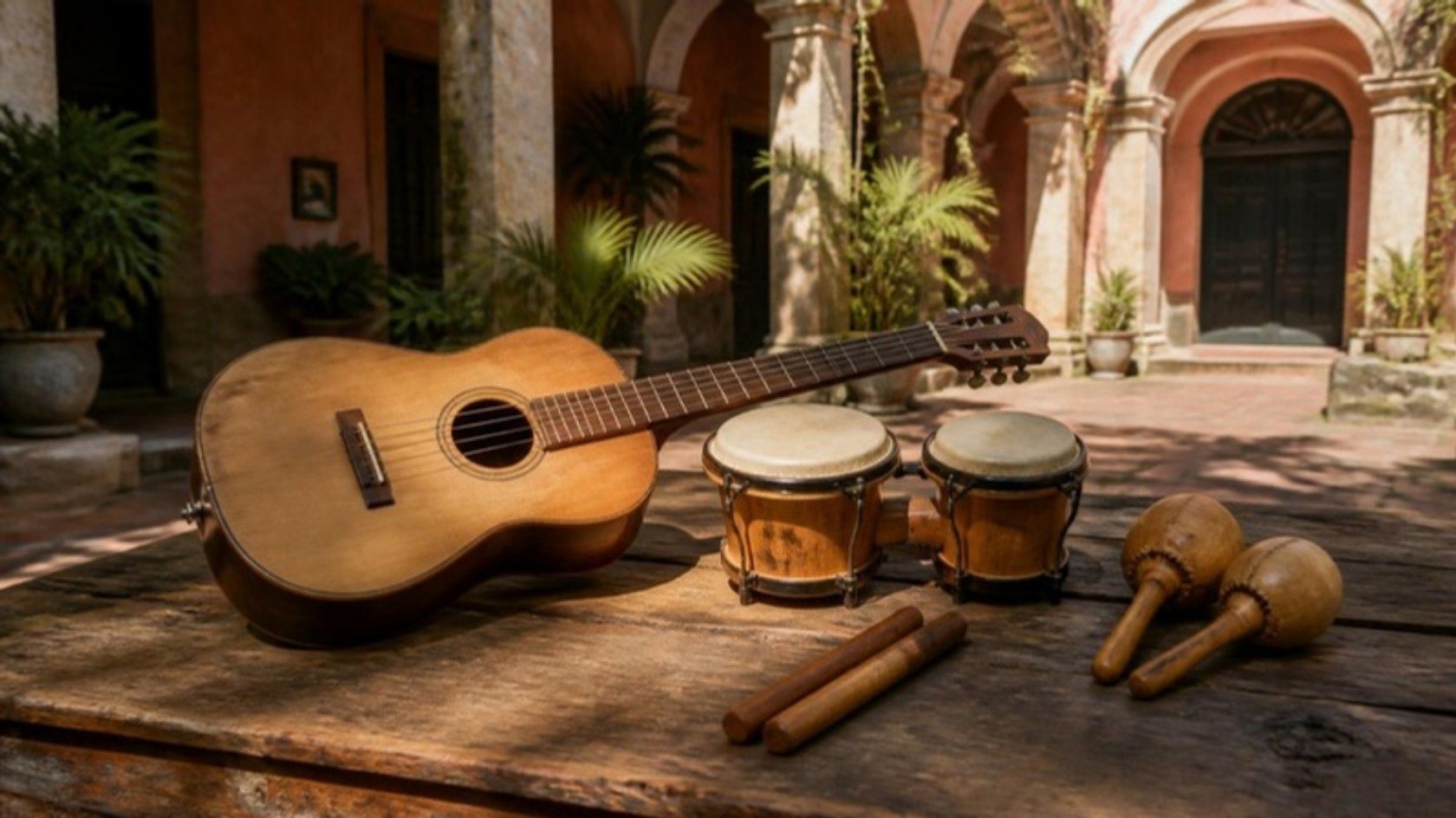
In short: son cubano, or simply son, is a Cuban genre of music and dance. Wikipedia says it originated in the highlands of eastern Cuba during the late 19th century and blends elements of Spanish and African origin. Its basic early ensemble used the tres, guitar, claves, bongos, marímbula or botija, and maracas. According to Wikipedia, son reached Havana around 1909, and SalsaVida says groups like Sexteto Habanero and Septeto Nacional popularized son. Wikipedia says son “is specifically considered to be the foundation on which salsa was created.” As a dance, SalsaVida describes son as danced contratiempo and in a circular motion.
At a Latin social night, the DJ may slip in an older-sounding song: a bright plucked guitar line, bongos, maracas, and a relaxed groove that still feels close to salsa. That may be son. This post looks at where son comes from, what instruments you may hear, and how it connects to the salsa you dance, in plain English.
Please read this first: I am a curious local in Sapporo, not a musician or a dance instructor, and I am not affiliated with any studio or school. This post organizes what I read in the sources listed at the end. Music history is told in different ways, so if a teacher you trust explains it differently, follow their lead.
Son in a few words
Wikipedia’s article opens by describing son cubano as “a genre of music and dance that originated in the highlands of eastern Cuba during the late 19th century.” It calls son a syncretic genre that “blends elements of Spanish and African origin.”
SalsaVida, a salsa dance website, says son emerged in the rural areas of eastern Cuba, “notably Santiago de Cuba and Guantánamo, during the late 1800s,” and that it combined Afro-Cuban percussion with Spanish guitar traditions. SalsaVida also explains that the word son translates as “sound” or “rhythm” in Spanish.
| Son cubano | What the sources say | |
|---|---|---|
| Where it comes from | Eastern Cuba | Wikipedia; SalsaVida |
| When | Late 19th century | Wikipedia; SalsaVida |
| Ingredients | Elements of Spanish and African origin | Wikipedia |
| Reached Havana | Around 1909; first recordings in 1917 | Wikipedia |
| Link to salsa | “The foundation on which salsa was created” | Wikipedia |
| Cultural heritage | “The practice of Cuban Son,” inscribed in 2025 | UNESCO |
Spanish and African roots
Wikipedia breaks down which parts of son come from which tradition:
- From the Spanish side: the vocal style, the lyrical metre, and the central role of the tres, which Wikipedia says derives from the Spanish guitar.
- From the African side: the clave rhythm, the call and response structure, and the percussion section, such as bongo and maracas. Wikipedia says these are rooted in traditions of Bantu origin.
Wikipedia also says that, historically, most musicologists have supported the idea that the earliest forms of son appeared in Cuba’s Oriente Province, particularly in mountainous areas such as the Sierra Maestra. It names early styles such as changüí, nengón, kiribá, and regina. It adds that musicologist Peter Manuel proposed an alternative idea: that much of son’s structure came from the contradanza in Havana.
UNESCO’s page on “The practice of Cuban Son” describes son as “a traditional music and dance practice that blends singing, instruments, rhythm and movement,” bringing together African and European musical traditions.
The instruments you may hear
Wikipedia lists the basic son ensemble of early 20th-century Havana as guitar, tres, claves, bongos, marímbula or botija, and maracas. SalsaVida’s list adds trumpet, bass, and later the piano.
| Instrument | What it is, according to the sources |
|---|---|
| Tres | A Cuban guitar (SalsaVida); Wikipedia says it plays a repeated figure called guajeo |
| Guitar | Part of the basic early ensemble (Wikipedia) |
| Claves | Part of the basic ensemble; the clave rhythm is one of son’s African-rooted elements (Wikipedia) |
| Bongos | Part of the percussion section (Wikipedia; SalsaVida) |
| Maracas | Part of the percussion section (Wikipedia; SalsaVida) |
| Marímbula or botija | Early “bass” instruments; Wikipedia says the double bass later replaced the marímbula |
| Trumpet | Added later, turning sextets into septets (Wikipedia) |
SalsaVida also describes the tumbao, a repetitive rhythmic pattern played mainly on the bass, as central to son music, “guiding both dancers and musicians.”
Names to know
According to Wikipedia, son reached Havana around 1909, the first recordings were made there in 1917, and son went on to become “Cuba’s most popular and influential genre.” These are groups and musicians that the sources mention:
- Sexteto Habanero. Wikipedia says this group, formed under that name in 1920, established the “classical” son sextet of guitar, tres, bongos, claves, maracas, and double bass.
- Septeto Nacional and Ignacio Piñeiro. Wikipedia names this septet and its leader as part of son’s growing popularity in the late 1920s. SalsaVida says Sexteto Habanero and Septeto Nacional popularized son.
- Trío Matamoros. Wikipedia says Miguel Matamoros founded the trio in 1925 with Siro Rodríguez and Rafael Cueto, and that it stayed prominent until its official retirement in 1960.
- Arsenio Rodríguez. Wikipedia calls him “the most influential player of son” in the 1940s. SalsaVida also lists him among notable musicians.
- Buena Vista Social Club. Wikipedia says the album and film led to a revival of traditional son and introduced it to a global audience. SalsaVida lists Compay Segundo and the Buena Vista Social Club among notable names.
How son leads to salsa
Wikipedia’s lead says salsa and the cha-cha are derived from son cubano. It describes salsa, which took off in New York’s music scene in the 1960s, as “a combination of son and other Latin American styles primarily recorded by Puerto Ricans.” In Cuba, Wikipedia says, son evolved into other styles such as songo and timba. My post Timba for Beginners: The Sound Behind Cuban Salsa Nights looks at timba, which Wikipedia describes as based on Cuban son.
SalsaVida puts the relationship this way: “The lines between salsa music and Son are blurry,” because the term salsa was first used as an umbrella term for several Latin styles, including son. For more on salsa’s roots and how people have debated them, see What Is Salsa? A Beginner’s Guide to Its Roots, Rhythm, and Basic Step.
Son as a dance
UNESCO says son “is performed in pairs or groups and combines improvisation with structured patterns.” SalsaVida describes son dance as known for “elegant movements and graceful style” closely tied to the tumbao rhythm.
| Point | What SalsaVida says about dancing son |
|---|---|
| Timing | Danced contratiempo (against the beat), similar to salsa On2 |
| Counts | Emphasis on the 2, 4, 6, and 8 counts of the music |
| Floor pattern | A circular motion rather than a slot, like Cuban-style salsa |
| Feel | Smoother and more elegant than Cuban salsa |
SalsaVida adds that many salsa dancers now bring son movements and styling into their dancing. If the clave and the eight-count are new to you, my post Salsa Music for Beginners: Clave, Counting, and Listening explains the clave rhythm and how dancers count the music.
If you want to try the son timing itself, a teacher can show you how they count it.
Son grew from the eastern Cuban countryside, mixing Spanish and African elements, and the sources link it closely to salsa. Next time an older Cuban song comes on, listen for the tres and enjoy the groove.
FAQ
What is son cubano?
Wikipedia describes son cubano as a genre of music and dance that originated in the highlands of eastern Cuba during the late 19th century, blending elements of Spanish and African origin.
What instruments are used in son?
Wikipedia lists the basic early ensemble as guitar, tres, claves, bongos, marímbula or botija, and maracas. It says the double bass later replaced the marímbula and a trumpet was added. SalsaVida also mentions the piano in later son.
How is son related to salsa?
Wikipedia says son “is specifically considered to be the foundation on which salsa was created,” and describes salsa as a combination of son and other Latin American styles. SalsaVida says the lines between the two are blurry.
Sources checked: Wikipedia, “Son cubano”, SalsaVida, “Son Cubano”, UNESCO Intangible Cultural Heritage, “The practice of Cuban Son”. Checked on October 7, 2026. Music history is described in different ways by different writers. Corrections are always welcome.