What to Wear to Your First Salsa Class: Clothes and Shoes
Contents
- The short answer: comfortable, neat, and easy to move in
- What to wear: clothes to look for
- Shoes for your first salsa class: the part that matters most
- Hair, accessories, and small details
- What to bring, and what to check first
- Check each class’s information before you go
- FAQ
- Do I need dance shoes for my first salsa class?
- Can I wear sneakers to a salsa class?
- Should I dress up for a beginner salsa class?
You found a beginner salsa class, and you are ready to try it. Then a simple question comes up: what should I wear? Do you need special shoes? Is it okay to wear jeans? Should you dress up?
In short: wear clothes that are comfortable, clean, and easy to move in, and choose shoes with a fairly smooth sole and a secure fit.
The good news is that most beginner classes are relaxed. You usually do not need anything special for your first lesson. This post is a set of general tips on clothes, shoes, and what to bring. I am not an instructor, and I do not recommend any brand, shop, or studio. Every class has its own customs and rules, so please check each class’s information or ask the organizer before you go.
The short answer: comfortable, neat, and easy to move in
For a first salsa class, many beginners choose clothes that are:
- Comfortable. You will step, turn, and move your arms for the whole class.
- Easy to move in. You should be able to step forward, back, and to the side without anything pulling.
- Neat and clean. Salsa is a partner dance. In many classes, partners rotate, so you may dance with many people.
That is really the core of it. You do not need a costume, and you do not need to look like a professional dancer. Many people come to class in what they would wear for a casual day out, as long as they can move freely.
What to wear: clothes to look for
Here is a simple guide to common clothing choices for a beginner class.
| Item | What to look for | Why it helps |
|---|---|---|
| Top | A breathable shirt or top you can lift your arms in | Turns often involve raised arms, and dancing can make you warm |
| Bottoms | Pants, a skirt, or a dress that lets your legs move freely | You need to step in several directions |
| Length | Not so long that it catches under your shoes | Long, loose hems can get stepped on during turns |
| Fit | Not too tight, not too baggy | Very loose sleeves can catch a partner’s hand; very tight clothes can limit movement |
| Layers | A light layer you can take off | Rooms can feel cool at the start and warm later |
Jeans are a common question. Some people dance in them, especially if they come straight from work. But stiff jeans can make it harder to move and can feel hot. If you have something softer and stretchier, that may feel easier for a first class.
Skirts and dresses are also common in salsa. If you choose one, many dancers think about whether it moves well when they turn and whether they feel comfortable in it.
Shoes for your first salsa class: the part that matters most
If you think about only one thing, think about your shoes. Salsa has many small turns, and your shoes decide how easily your feet can pivot on the floor.
- Smooth soles turn more easily. Many beginners look for shoes with a fairly smooth sole that can slide a little on the floor.
- Very grippy soles can make turns harder. Some running shoes and sneakers have rubber soles that grip the floor strongly. They are fine for walking, but they can make it harder to pivot.
- A low or flat heel is a common start. Many beginners start in low-heeled or flat shoes and decide about heels later.
- Secure fit. Shoes should stay on your feet. Loose sandals or slippers can come off during a turn.
- Clean, indoor shoes. Many venues ask dancers not to wear outdoor shoes on the dance floor, to protect the floor and keep it clean. Some may have other rules. Check before you go, and bring your shoes in a bag if needed.
Do you need dance shoes for your first class? Usually not. Dance shoes are made for turning and are popular with regular dancers. But many people try a few classes first, see if they enjoy salsa, and then decide. If you are not sure, ask the organizer what most beginners wear.
If your feet, knees, or back hurt while dancing, stop and rest. If the pain continues, please ask a qualified professional.
Hair, accessories, and small details
A few small details can make a partner dance more comfortable for everyone:
- Long hair. Many dancers tie long hair back. During turns, loose hair can swing into a partner’s face.
- Jewelry and watches. Large rings, bracelets, and watches can catch on a partner’s hand or clothes. Some people take them off before class.
- Bags and belts. Big belt buckles or things in your pockets can get in the way when you dance close to a partner.
- Scent. Many people avoid strong perfume, because some dancers are sensitive to it.
My post on Social Dance Etiquette for Beginners has more general notes on hygiene and manners at a social.
What to bring, and what to check first
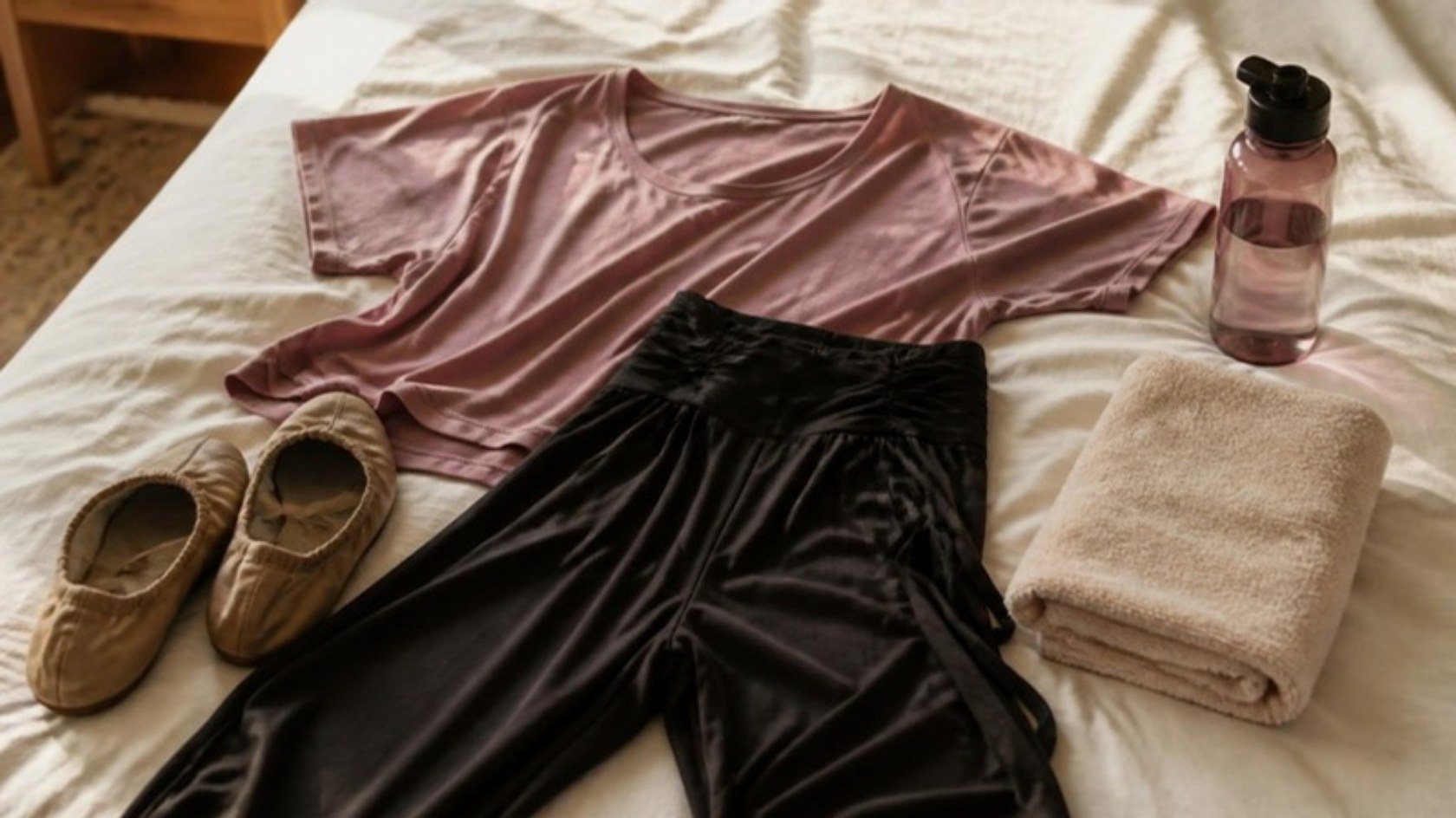
Here is a short list of things many beginners bring to a class:
- Water. Check whether drinks are allowed in the room.
- A small towel. Dancing can make you sweat, even in a beginner class.
- A spare shirt. Useful if you want to change after class, or if there is a social afterward.
- Your dance shoes or clean indoor shoes, in a bag, if the venue asks for them.
- A small bag for your used shirt or towel.
You do not need to bring a partner to many beginner classes, because partners often rotate. But some classes are for couples only, so check the class details. If you are still looking for a class, How to Find a Latin Dance Class in a New City has general steps and questions to ask.
Check each class’s information before you go
Classes are different. Some are held in studios with wooden floors. Others use community spaces or event rooms. Some have clear rules about shoes or clothing. Others have none. The atmosphere can also differ: some classes are very casual, and some people like to dress up a little for a social after class.
So the simplest step is this: read the class information, and if something is not clear, ask the organizer. A short message like “What do beginners usually wear? Are there rules about shoes?” is a normal question.
If you live in Sapporo or are visiting, the same advice applies. Look for classes through official websites or community pages and check the latest information, because details can change. And if you want to know more about the dance itself before your first lesson, What Is Salsa? is a gentle place to start.
FAQ
Do I need dance shoes for my first salsa class?
Usually not. Many beginners start in comfortable shoes with a fairly smooth sole and a secure fit. Some venues have rules about outdoor shoes, so check the class information or ask the organizer.
Can I wear sneakers to a salsa class?
Some people do. But sneakers with very grippy rubber soles can make turns harder. If you have shoes with a smoother sole, they may feel easier. Ask the organizer if the venue has rules about shoes.
Should I dress up for a beginner salsa class?
Most beginner classes are casual. Clothes that are comfortable, clean, and easy to move in are usually fine. Socials can be a little more dressy, depending on the event, so check each organizer’s information.