Salsa Music for Beginners: Clave, Counting, and Listening
Contents
- Salsa music in a few words
- The clave: the rhythm under the rhythm
- 2-3 and 3-2: two sides of the clave
- From the band’s measures to the dancer’s eight-count
- Salsa instruments you may hear
- Simple salsa listening practice
- FAQ
- What is clave in salsa music?
- What is the difference between 2-3 and 3-2 clave?
- Do I need to hear the clave before I start dancing salsa?
When you first listen to salsa music, it can sound like a lot is happening at once. Drums, piano, horns, singing, and many small percussion sounds all play together. Where is the beat? How do dancers know when to step?
The good news is that you don’t need to be a musician to start hearing the structure. This post introduces a few basic ideas, especially the clave, and suggests simple ways to practice listening.
Please read this first: I am a curious local in Sapporo, not a dance instructor or a musician. This post summarizes what I have read in reliable sources, and I link to them so you can read more. Teachers explain music and counting in different ways, so if your class says something different, follow your teacher.
Salsa music in a few words
The word “salsa” is used for both the music and the dance. The dance and the music are closely connected, so learning to listen is part of learning to dance.
Salsa music has deep Afro-Cuban roots. A Library of Congress research guide describes salsa as born in New York City in the 1960s, blending Latin rhythms such as Puerto Rican plena and Cuban son with American jazz, blues, and rock (Library of Congress). A U.S. National Park Service exhibit on salsa also notes that son montuno, a type of Cuban song, came before salsa music (National Park Service). For a longer look at salsa’s history, and why people have debated it for decades, see What Is Salsa?
The clave: the rhythm under the rhythm
If you read about salsa music, one word comes up again and again: clave.
The word has two meanings:
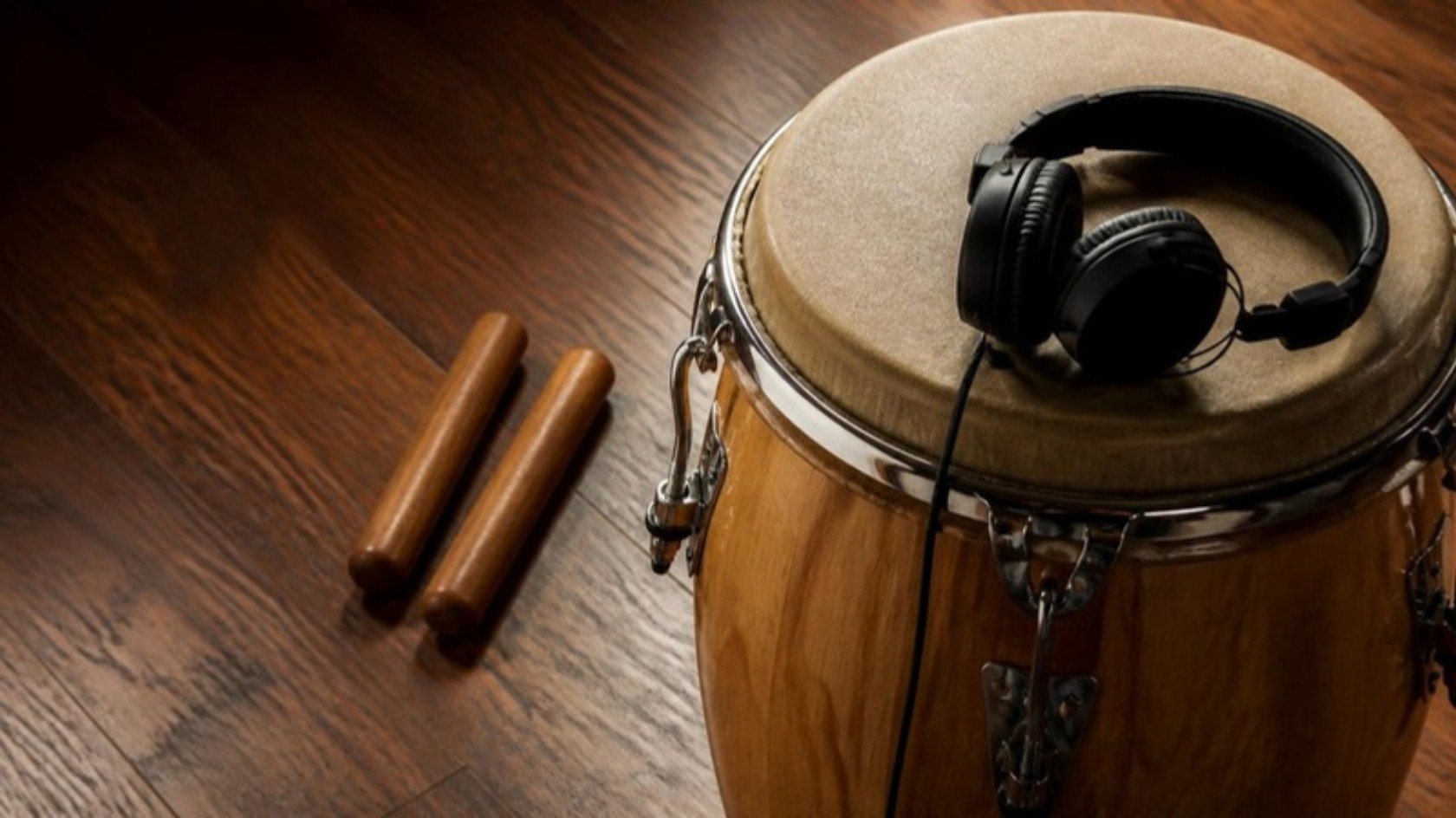
- An instrument. The Berklee PULSE lesson quoted below calls it a traditional two-stick percussion instrument.
- A rhythm. Clave is also the name of a short, repeating rhythm pattern.
The National Park Service exhibit puts it simply: clave is the name of the instrument and also of the rhythm that most salsa music is built on. It explains that the claves help keep the whole band together, and that the claves and the congas work together to set the rhythmic backbone of salsa (National Park Service).
A lesson from Berklee PULSE, an online music education resource from Berklee, describes two basic types of clave, son clave and rumba clave. It explains that most Afro-Cuban styles of music are built around one version of the clave pattern, which is fixed and repeated through the song, and that it forms the foundation for the percussionists and the other musicians (Berklee PULSE lesson, PDF).
One more point from the same lesson is helpful for beginners: the clave rhythm is often not played by itself in a song. It can be implied, but it still drives the feel of the music. So if you can’t hear the claves clearly in a song, that is normal.
2-3 and 3-2: two sides of the clave
Salsa music is generally played in units of two measures, with four beats in each measure (National Park Service). The clave pattern stretches across both measures.
The Berklee PULSE lesson explains that one measure has three clave notes and the other has two. These are often called the “3-side” and the “2-side.” When the 3-side comes first, it is called 3-2 clave. When the 2-side comes first, it is called 2-3 clave. A song is based on one version.
Here is the son clave, based on the charts in the Berklee PULSE lesson. “+” means the “and,” the halfway point between two beats.
| Pattern | Measure 1 | Measure 2 |
|---|---|---|
| 3-2 son clave | 1, the “and” of 2, 4 | 2, 3 |
| 2-3 son clave | 2, 3 | 1, the “and” of 2, 4 |
The same lesson explains that the difference between son clave and rumba clave is the placement of the last note on the 3-side. For a beginner, it is enough to know that both exist.
Try it: count “1, 2, 3, 4, 1, 2, 3, 4” slowly and steadily. Then clap only on the clave notes in the 3-2 row above. Clapping on the “and” of 2 is the tricky part. Go slowly, and it will start to feel natural.
From the band’s measures to the dancer’s eight-count
In class, you will probably count to eight, not to four. That is because dancers usually count two measures of four beats as one eight-count.
If you write the two measures as one eight-count, the 3-2 son clave from the table above falls on 1, the “and” of 2, 4, then 6 and 7. This is simply the same pattern, numbered in a different way.
| Musicians often count | Dancers often count | |
|---|---|---|
| Measure 1 | 1, 2, 3, 4 | 1, 2, 3, 4 |
| Measure 2 | 1, 2, 3, 4 | 5, 6, 7, 8 |
The basic salsa step uses this eight-count: dancers often step on 1, 2, 3, pause on 4, then step on 5, 6, 7, and pause on 8. I explain this in more detail in What Is Salsa?, including the difference between On1 and On2.
You don’t need to dance “on clave” from day one. Many beginners first learn to find the beat and count to eight. Hearing the clave can come later, little by little.
Salsa instruments you may hear
The National Park Service exhibit lists strings, brass, and percussion among the instrument families of salsa. It names instruments such as the guitar, tres, trumpet, trombone, saxophone, double bass, piano, congas, bongos, timbales, claves, cowbell, and güiro (National Park Service).
Not every song uses all of them. Here is a simple listening guide:
| Instrument family | Examples | What to listen for |
|---|---|---|
| Percussion | Claves, congas, bongos, timbales, cowbell, güiro | The steady, repeating rhythm layers |
| Piano and strings | Piano, tres, guitar, double bass | Repeating patterns and the low notes under the music |
| Brass | Trumpet, trombone, saxophone | Bold melodies that come and go |
| Voices | Lead singer and other singers | Verses, and lines that answer each other |
Two more words you may hear:
- Montuno. The National Park Service describes montuno as a repeated rhythm in salsa music, typically played on the piano in a repeating way. Try to find the piano part that keeps coming back.
- Call and response. The same exhibit explains that many salsa songs use a call-and-response format, where one instrument plays a phrase and another answers with the same or a similar phrase. It notes that trombones are often part of this in salsa.
Simple salsa listening practice
Here are a few simple ways to practice. You can do them at home, on a walk, or on the train.
- Find the steady beat. Put on a salsa song and tap your foot or clap on every beat. Count “1, 2, 3, 4” again and again.
- Count to eight. When the steady beat feels easy, count “1” to “8” instead.
- Pick one instrument. Listen to the same song several times, and each time follow only one sound: the piano, the congas, or the singer.
- Listen for call and response. Notice when one voice or instrument “asks” and another “answers.”
- Try the clave clap. Clap the 3-2 son clave from the table above, slowly, while someone else (or a metronome app) keeps the steady beat.
Don’t worry if this feels hard at first. Music is a skill you build over time, and everyone learns at their own pace. When you feel ready to try a class, see How to Find a Latin Dance Class in a New City.
FAQ
What is clave in salsa music?
Clave is both a traditional two-stick percussion instrument and the name of a short, repeating rhythm. The U.S. National Park Service describes clave as the rhythm that most salsa music is built on.
What is the difference between 2-3 and 3-2 clave?
The clave pattern lasts two measures, with three notes in one measure and two in the other. In 3-2 clave, the three-note side comes first. In 2-3 clave, the two-note side comes first.
Do I need to hear the clave before I start dancing salsa?
No. Many beginners start by finding the steady beat and counting to eight. Hearing the clave can come later, as you listen to more music.