Forró for Beginners: Brazil's Northeastern Dance and Its Music
Contents
- Forró in a few words
- Where the name comes from
- A timeline of forró
- By the end of the 19th century: “forrobodó” parties
- 1940s: Luiz Gonzaga and baião on the radio
- 1954 to the 1960s: off the big city stages
- 1989: an album abroad
- 1990s: “electronic” forró
- 2008 to 2019: festivals outside Brazil
- 2021: heritage recognition
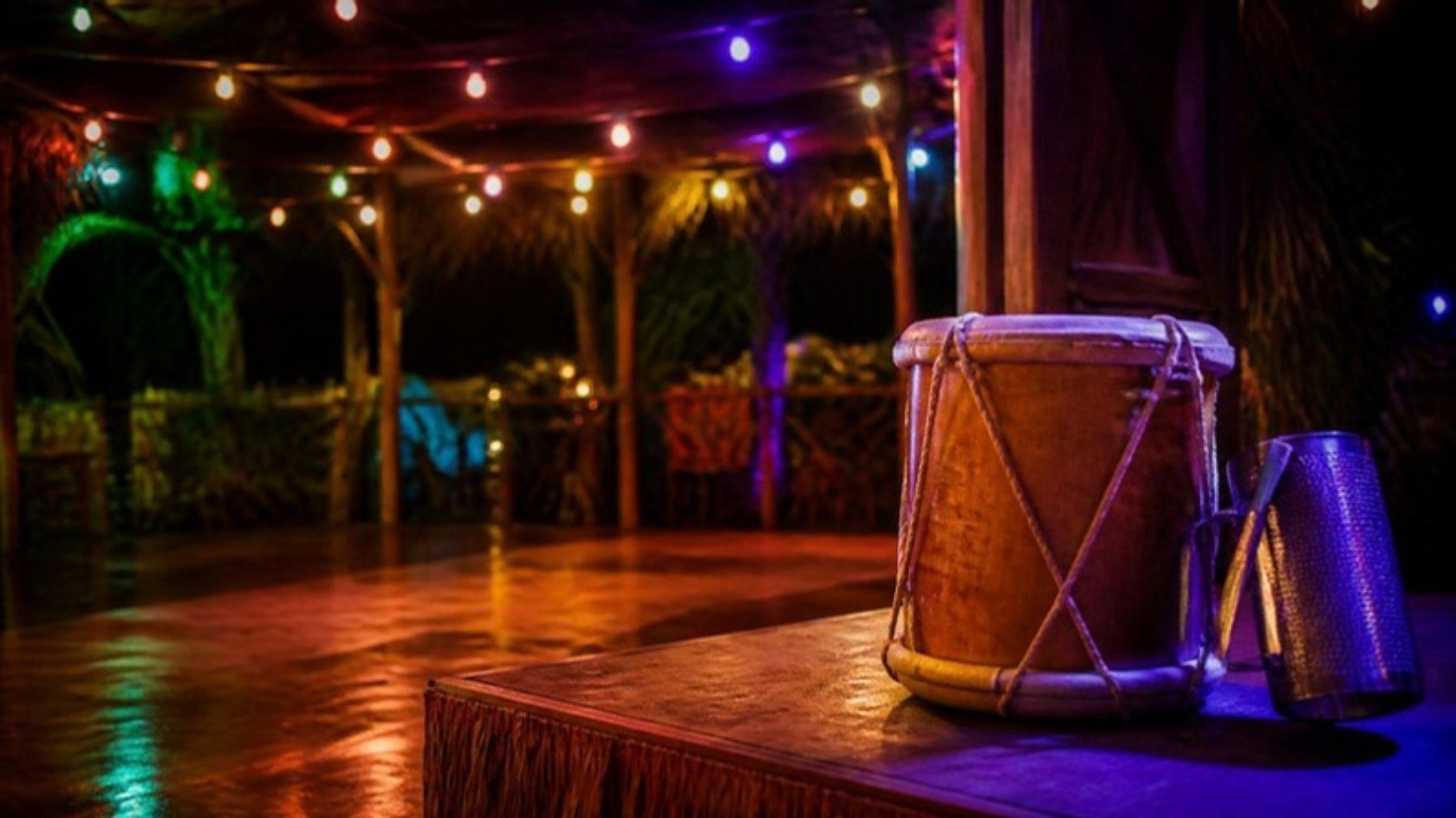
- The music: accordion, zabumba, and triangle
- Baião: the original forró, or a rhythm inside it?
- How Wikipedia’s “Forró” article describes the dance
- Rhythms and styles of forró
- Tips for beginners
- FAQ
- What is forró?
- What instruments are used in forró?
- What are xote, baião, and arrasta-pé?
- Where does the name “forró” come from?
In short: Wikipedia’s “Forró” article says the term forró “refers to a musical genre, a rhythm, a dance and the event itself where forró music is played and danced,” and calls it “an important part of the culture of the Northeastern Region of Brazil.” It says the music “is based on a combination of three instruments (accordion, zabumba and a metal triangle),” a combination it says “was defined as the base of forró by Luiz Gonzaga.” It names rhythms including “xote (a slower-paced rhythm), baião (the original forró) and arrasta-pé (the fastest),” and adds “forró itself.” On the name, it says “there are several theories,” and that “the main theory is that forró is a clipping of forrobodó, meaning ‘great party’ or ‘commotion’.” It also says forró “received recognition as a cultural heritage in Brazil in 2021.”
If you have seen “forró” on the program of a Brazilian or Latin dance night and wondered what it is, this post is for you. It looks at where forró came from, in time order, and how the sources describe its music and the way it is danced, in plain English.
Please read this first: I am a curious local in Sapporo, not a dancer or a dance instructor, and I am not affiliated with any studio or school. This post organizes what I read in the sources listed at the end. Dance history is told in different ways, the sources below don’t all describe baião’s place in forró the same way, and steps and styles are taught differently by different teachers, so if a teacher you trust explains it differently, follow their lead.
Forró in a few words
| Forró | Source | |
|---|---|---|
| What it is | “A musical genre, a rhythm, a dance and the event itself where forró music is played and danced” | Wikipedia, “Forró” |
| Where it comes from | “Several states of the Brazilian Northeast,” naming Bahia, Pernambuco, Paraíba, Rio Grande do Norte, and Alagoas | Wikipedia, “Forró” |
| Its basic trio | “Accordion, zabumba and a metal triangle” | Wikipedia, “Forró” |
| Its rhythms | “Xote (a slower-paced rhythm), baião (the original forró) and arrasta-pé (the fastest), and forró itself” | Wikipedia, “Forró” |
| The name | “Several theories”; the main one is that it is “a clipping of forrobodó” | Wikipedia, “Forró” |
| How it is danced | “Danced in pairs,” with “one of the leader and one of the follower” | Wikipedia, “Forró” |
| Heritage status | “Recognition as a cultural heritage in Brazil in 2021” | Wikipedia, “Forró” |
Where the name comes from
Wikipedia’s “Forró” article says “there are several theories on the origin of the name,” but the only one it explains is what it calls the main theory:
- A clipping of forrobodó. It says “forró is a clipping of forrobodó, meaning ‘great party’ or ‘commotion’,” and that “this is the view held by Brazilian folklorist Luís da Câmara Cascudo.”
- Further back. It says forrobodó “is believed to come from the Galician–Portuguese word forbodó (itself a corruption of fauxbourdon), which was used in the Portuguese court to define a dull party.”
- To Brazil. It says the word “was carried by Portuguese migration waves to Brazil, and lost the light negative meaning and was slowly simplified by their children.”
The article does not describe the other theories in that section, so this post doesn’t either.
A timeline of forró
By the end of the 19th century: “forrobodó” parties
The “Forró” article says “the forrós were popular dances that took place in certain locations, using various rhythms,” and that “according to the Pernambucan press,” they “were known as ‘forrobodó’ or ‘forrobodança’ or even ‘forrobodão’ already by the end of the 19th century.” It says forró “has its joint origin in several states of the Brazilian Northeast, emerging in the outskirts of the capitals and in the countryside.” Wikipedia’s “Baião (music)” article says “baião originated sometime before the 20th century in the Bahia region in the Northeast of Brazil,” and that Câmara Cascudo said it had been “a popular dance since at least the late 19th century.”
1940s: Luiz Gonzaga and baião on the radio
Wikipedia’s “Luiz Gonzaga” article says Gonzaga (1912–1989) noticed that “the north-eastern people living in Rio de Janeiro missed the music from their home states,” and “started to integrate traditional (forró) music rhythms and instruments in his work.” It says that “in 1943, he dressed up in typical north-eastern costumes for the first time to perform live.” The “Baião (music)” article says “baião was popularized via radio in the 1940s, reaching peak popularity in the 1950s,” and that Câmara Cascudo said it was “propelled into the mainstream by the 1946 success of Luiz Gonzaga.”
The “Forró” article says the traditional music used to dance forró “was brought to the Southeast from the Northeast by Luiz Gonzaga.” It says the song “Asa Branca,” which it calls “anonymous,” was “made famous across all of Brazil in the 1940s by Luiz Gonzaga.” The “Luiz Gonzaga” article instead says “Asa Branca” was “written with Humberto Teixeira” and “recorded in 1947.” The two articles differ on who wrote it.
1954 to the 1960s: off the big city stages
The “Luiz Gonzaga” article says “he worked on the radio until 1954.” It says that during the 1960s, “as the public taste shifted to bossa nova and iê-iê-iê, he found himself increasingly stranded from big city stages, so he toured the countryside, where his popularity never abated.” The “Baião (music)” article says a decision by “1960s MPB and Tropicália musicians to embrace and reference traditional and folk music saw a resurgence of baião rhythms,” and names “the 1967 album by Quarteto Novo” as “a key record in this revival.”
1989: an album abroad
The “Forró” article says a compilation album titled Brazil: Forró - Music for Maids and Taxi Drivers “was released internationally in 1989, and was nominated for a Grammy Award in the United States two years later.” The “Luiz Gonzaga” article says Gonzaga died on August 2, 1989.
1990s: “electronic” forró
The “Forró” article says “starting in the 1990s, forró music experienced renewed aesthetics, becoming a more ‘commercial’ genre of Brazilian pop music.” It says new bands “used drums, electronic keyboards and electric guitars,” and that “this new kind of forró music was initially called forró eletrônico.” It adds that “in the following decades this new kind of forró became much more popular in Northeastern Brazil than ‘traditional’ forró.”
2008 to 2019: festivals outside Brazil
The same article says “the first forró festival outside Brazil was in 2008; ‘Forró de Domingo’ in Stuttgart, Germany.” It says that “since 2016, festivals have also been organised in North America, Russia, Oceania and Japan,” and that “in 2019, over 70 international festivals were planned outside of Brazil.”
2021: heritage recognition
The “Forró” article says forró “received recognition as a cultural heritage in Brazil in 2021.”
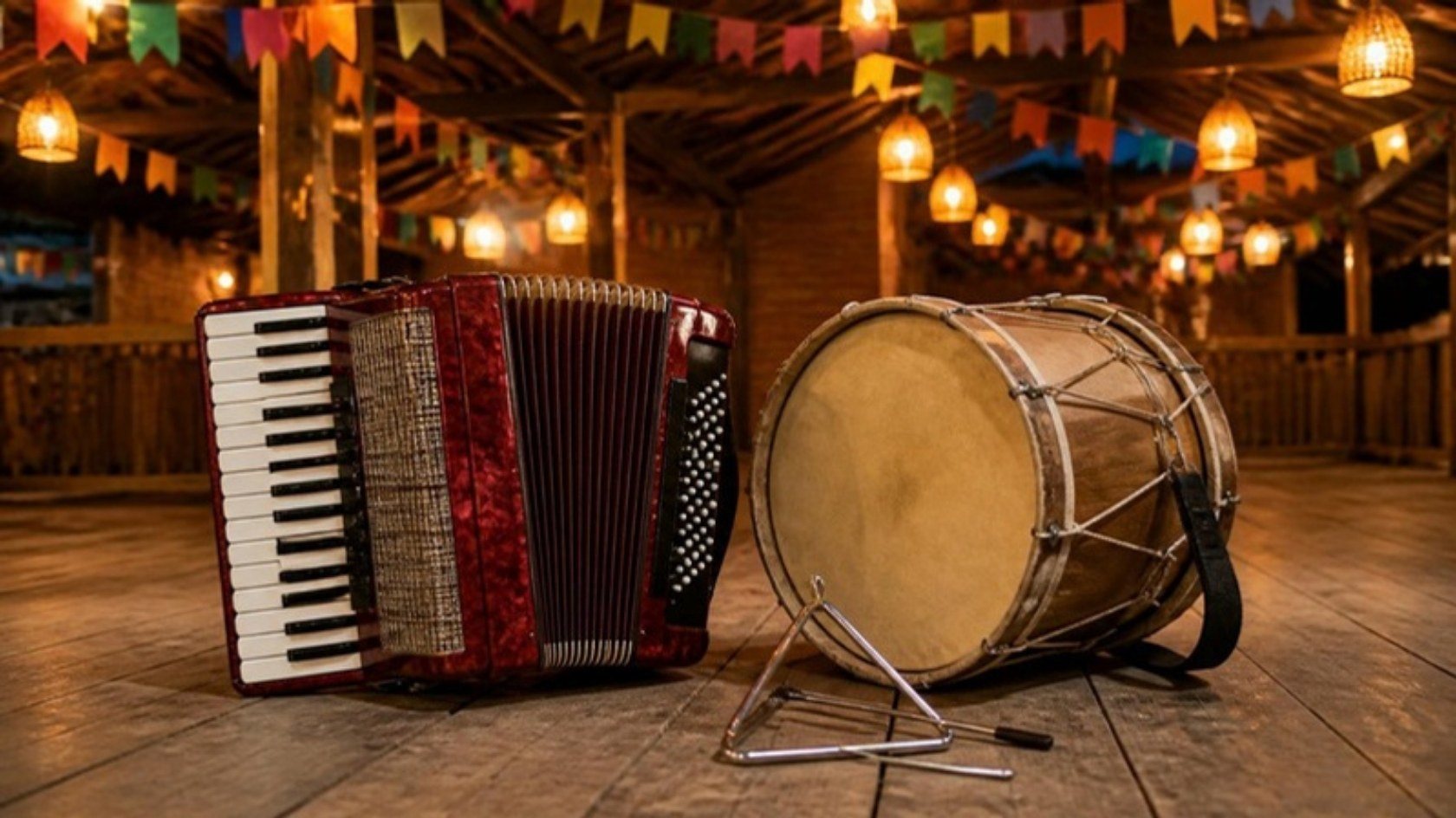
The music: accordion, zabumba, and triangle
The “Music” section of Wikipedia’s “Forró” article calls the forró of Luiz Gonzaga “the original musical style, from which have grown most of the musical styles today denoted as forró,” and says this style is “commonly called also forró pé-de-serra.” Here is how it describes the three instruments:
| Instrument | What Wikipedia’s “Forró” article says |
|---|---|
| Accordion | “The typical melody instrument used in forró,” “sometimes called the ‘Soul of Forró’ or the ‘Soul of the Sertão’”; it “is always part of a forró ensemble,” apart from “forró rabecado,” where a fiddle replaces it |
| Zabumba | “Played on both sides, on one side giving a grave sound and on the other a sharp whip-like sound,” it “plays the syncopated rhythms essential to forró” |
| Triangle | It “keeps an ongoing pulse,” which the article compares to “the rhythm guitar or the hi-hat of the drum set in rock music” |
The article says this trio “was defined as the base of forró by Luiz Gonzaga,” and that “before Gonzaga other combinations have been commonly used.” It also says the trio “serves rather as a base and is not fixed,” sometimes adding instruments “such as fiddle, flute, pandeiro, bass, cavaquinho and acoustic guitar.” The “Luiz Gonzaga” article quotes Caetano Veloso’s view that Gonzaga created, with “the combination of accordion, zabumba, and triangle (which became later the basic ensemble for Forró),” one of “the western world’s first ‘small pop music ensembles’.”
On themes, the “Forró” article says traditional lyrics “were about life in the rural North-East (in particular the Sertão),” including “droughts, migration to look for work and thus about longing or homesickness (saudade),” and that lyrics are “also often about love and romance.”
Baião: the original forró, or a rhythm inside it?
The two articles put baião in slightly different places:
| Source | What it says |
|---|---|
| Wikipedia, “Forró” | It lists “baião (the original forró)” among forró’s rhythms, and says Gonzaga “transformed the baião… into a more sophisticated rhythm” |
| Wikipedia, “Baião (music)” | Baião “is a Northeastern Brazilian music genre and dance style,” and “the baião rhythm is integral to the genres of forró, repente and coco (or embolada)” |
On the word itself, the “Forró” article says baião is “a word originated from baiano,” and the “Baião (music)” article gives “baiano” as another name for it.
How Wikipedia’s “Forró” article describes the dance
These points come from the “Dance” section of Wikipedia’s “Forró” article:
- In pairs. “Forró is danced in pairs. There are two dance roles, one of the leader and one of the follower.”
- Close together. It is “danced usually very close together,” with “the leader’s left hand holding the follower’s right hand, the leader’s right arm around the follower’s back and the follower’s left arm around the leader’s neck.” It adds that “other styles may require to stay partially away.”
- Spins are optional. “Influences from Cuban salsa, Samba de Gafieira and zouk has given mobility to forró,” with the follower, and occasionally the leader, being spun, “although it’s not essential to spin at all.”
- Changing roles. “Especially in European forró communities, there is a trend to break and discuss the traditional gender roles of leading men and following women.”
If lead and follow is new to you, my post Salsa Lead and Follow: A Beginner’s Guide to Roles and Frame explains the basic idea of the two roles in another Latin dance.
Rhythms and styles of forró
The “Forró” article says “there are various rhythms of forró,” and that among them “there are many styles of dancing, which varies from region to region, and may be known by different names according to the location.” Here is how it describes the three rhythms and one style danced to each:
| Rhythm | What the article says | One style it lists |
|---|---|---|
| Xote | “A slower-paced rhythm”; “xote originally has its roots in the schottische” | Xote: “a basic style, danced close together in a left-left-right-right movement and has no spinning or variations” |
| Baião | “The original forró” | Baião/pé-de-serra: “basically a style of xote, but with the partners tilting to the sides and moving their legs less to follow the faster rhythm” |
| Arrasta-pé | “The fastest” | Arrasta-pé: “can only be danced to its own style, much like a very fast xote, but alternately marking the beats on the ground with both legs” |
The article also says forró styles “are informally often grouped into two main ‘families’”:
| Family | What the article says |
|---|---|
| Nordestino (north-eastern) | “Danced with the couple much closer together, with their legs often inter-twined and a characteristic sideways shuffle movement,” so “there are not as many step variations” |
| Universitário (university) | “The more popular style outside of the Northeast,” with a basic step that is “forward-backwards — slightly similar to traditional bolero or salsa in line,” and “many more moves, steps and turns” |
That comparison to bolero comes up more than once in the article. My post Bolero for Beginners: Slow Romance in Latin Music and Dance introduces bolero. Wikipedia’s “Brazilian Zouk” article also names forró, with samba, as a dance more typically danced in Brazil than zouk. My post Brazilian Zouk for Beginners: Where It Came From and How It Feels tells that story.
Tips for beginners
These are my own suggestions, not rules from the sources.
- Listen for the trio. When you hear forró, try to pick out the accordion’s melody, the triangle’s steady pulse, and the zabumba’s syncopated beats.
- Ask which family a class teaches. The “Forró” article describes the close Nordestino styles and the forward-and-back universitário style quite differently.
- Ask about the embrace. The article says forró is usually danced very close together, so ask the teacher how a class handles the hold and what feels comfortable for you.
- Don’t worry about spins at first. The article says “it’s not essential to spin at all.”
Forró grew out of “forrobodó” parties in Northeastern Brazil, reached the rest of the country through Luiz Gonzaga’s music in the 1940s, went electronic in the 1990s, spread to festivals abroad from 2008, and received recognition as a cultural heritage in Brazil in 2021. Next time “xote” or “baião” appears on an event program, you will know how the sources connect them to forró.
FAQ
What is forró?
Wikipedia’s “Forró” article says the term refers to a musical genre, a rhythm, a dance, and the event where forró music is played and danced. It calls forró an important part of the culture of the Northeastern Region of Brazil, and says it received recognition as a cultural heritage in Brazil in 2021.
What instruments are used in forró?
Wikipedia’s “Forró” article says the music is based on three instruments, the accordion, the zabumba, and a metal triangle, a combination it says Luiz Gonzaga defined as the base of forró. It says the combination is not fixed and sometimes adds other instruments, such as fiddle, flute, or acoustic guitar.
What are xote, baião, and arrasta-pé?
Wikipedia’s “Forró” article lists them as rhythms of forró. It describes xote as a slower-paced rhythm, baião as the original forró, and arrasta-pé as the fastest. Wikipedia’s “Baião (music)” article describes baião as a Northeastern Brazilian music genre and dance style whose rhythm is integral to forró.
Where does the name “forró” come from?
Wikipedia’s “Forró” article says there are several theories. The main theory, held by Brazilian folklorist Luís da Câmara Cascudo, is that forró is a clipping of forrobodó, meaning “great party” or “commotion.” The article does not describe the other theories.
Sources checked: Wikipedia, “Forró”, Wikipedia, “Luiz Gonzaga”, Wikipedia, “Baião (music)”, Wikipedia, “Brazilian Zouk”. Checked on October 8, 2026. Dance history is described in different ways by different writers, and styles are taught differently by different teachers. Corrections are always welcome.